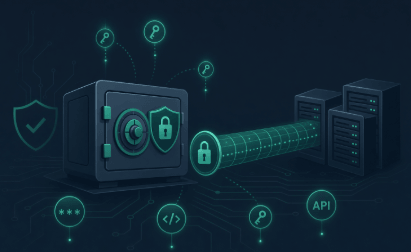
In today’s digital-first world, organizations rely on countless applications, cloud platforms, APIs, and infrastructure tools to operate efficiently. Each of these systems requires credentials such as passwords, API keys, tokens, and encryption keys. Managing these credentials manually can quickly become complex and risky. This is where automated secrets management becomes essential. By securely storing, controlling, and automatically rotating sensitive credentials, automated secrets management helps businesses maintain strong security while improving operational efficiency.
Understanding Automated Secrets Management
At its core, automated secrets management is a security approach designed to protect and control access to sensitive information used by applications, services, and infrastructure. These secrets can include:
- API keys
- Database credentials
- Encryption keys
- SSH keys
- Access tokens
- Service account passwords
Instead of storing these credentials in configuration files, scripts, or code repositories—which can expose them to security risks—automated secrets management systems store them in encrypted vaults and control how they are accessed.
Automation ensures that secrets are generated, rotated, and revoked automatically, minimizing the chances of human error and reducing the risk of unauthorized access.
Why Secrets Management Matters More Than Ever
As businesses adopt cloud computing, microservices, and DevOps practices, the number of secrets within an organization increases rapidly. Without a secure management system, these credentials can easily become vulnerabilities.
Here are some of the key reasons automated secrets management is critical today:
1. Preventing Data Breaches
Many security breaches occur because sensitive credentials are accidentally exposed in code repositories or shared insecurely among teams. Automated secrets management ensures that these credentials remain encrypted and only accessible through secure authentication mechanisms.
2. Eliminating Hardcoded Credentials
Hardcoded passwords in application code are a common security flaw. Automated secrets management removes the need for this practice by dynamically delivering credentials to applications when needed.
3. Improving Compliance
Organizations operating in regulated industries must comply with security standards and regulations. Automated secrets management helps maintain audit logs, access control policies, and encryption standards required by compliance frameworks.
4. Enhancing Operational Efficiency
Manually managing thousands of credentials across multiple systems can slow down IT teams. Automation simplifies credential lifecycle management, allowing teams to focus on strategic initiatives rather than repetitive administrative tasks.
How Automated Secrets Management Works
An automated secrets management system typically follows a structured process to ensure security and efficiency:
Secure Storage
Secrets are stored in a centralized and encrypted vault. Only authorized systems or users can access them through authentication protocols.
Dynamic Credential Generation
Instead of using static credentials, some systems generate temporary credentials when an application requests access. These credentials expire automatically after a set period.
Automated Rotation
Regular credential rotation is a critical security practice. Automated secrets management ensures that passwords and keys are changed frequently without disrupting services.
Access Control Policies
Role-based access control ensures that only authorized users, services, or applications can retrieve specific secrets.
Audit Logging
All secret access and activity are logged for monitoring and compliance purposes.
Key Benefits of Automated Secrets Management
Organizations that implement automated secrets management gain several strategic advantages.
Stronger Security Posture
Sensitive credentials remain protected within encrypted environments and are never exposed unnecessarily. This significantly reduces the attack surface for cyber threats.
Reduced Human Error
Automation eliminates many manual processes that often lead to misconfigurations or accidental exposure of secrets.
Faster Application Development
Developers can securely access required credentials without manually requesting them from security teams, accelerating development cycles.
Better Visibility and Control
Centralized management allows security teams to monitor access, enforce policies, and quickly revoke credentials if suspicious activity occurs.
Automated Secrets Management in DevOps and Cloud Environments
Modern software development practices like DevOps rely heavily on automation and continuous integration pipelines. However, these environments also introduce new security challenges, especially when applications interact with multiple services and platforms.
Automated secrets management integrates seamlessly with DevOps workflows by securely injecting credentials during runtime rather than storing them in code repositories. This ensures that development teams maintain both speed and security.
In cloud-native environments, where containers and microservices are constantly being deployed and scaled, automated secrets management ensures that every service receives secure, temporary credentials without manual intervention.
Best Practices for Implementing Automated Secrets Management
To fully benefit from automated secrets management, organizations should follow several best practices:
Centralize Secret Storage
Avoid storing credentials in multiple locations. A centralized secrets vault provides better control and monitoring.
Enforce Least Privilege Access
Only grant access to secrets that users or applications absolutely need to perform their tasks.
Automate Credential Rotation
Frequent rotation limits the impact of compromised credentials and ensures long-term security.
Monitor and Audit Access
Continuous monitoring helps detect suspicious activity and provides valuable insights into how secrets are being used.
Integrate with Existing Security Tools
Automated secrets management should work alongside identity management, monitoring systems, and security platforms to create a comprehensive defense strategy.
The Future of Secrets Management
As organizations continue their digital transformation journeys, the importance of securing credentials will only grow. Emerging technologies like cloud-native security platforms, zero-trust architectures, and AI-driven threat detection are making automated secrets management even more powerful.
Future solutions will likely offer deeper integration with development tools, enhanced automation capabilities, and smarter anomaly detection to identify potential security threats before they escalate.
For businesses handling large-scale infrastructure and sensitive data, adopting automated secrets management will become a foundational component of modern cybersecurity strategies.
See also: The Rise of AI Content Generators for Social Media Marketing
Final Thoughts
In a world where applications, services, and cloud platforms rely heavily on credentials to communicate and function, protecting those credentials is critical. Automated secrets management provides a powerful solution by securing sensitive data, automating credential lifecycles, and ensuring that access remains tightly controlled.
Organizations that adopt automated secrets management not only strengthen their security posture but also streamline operations and support faster innovation. As cyber threats continue to evolve, implementing automated and secure credential management is no longer optional—it’s a vital step toward building a resilient and future-ready IT environment.