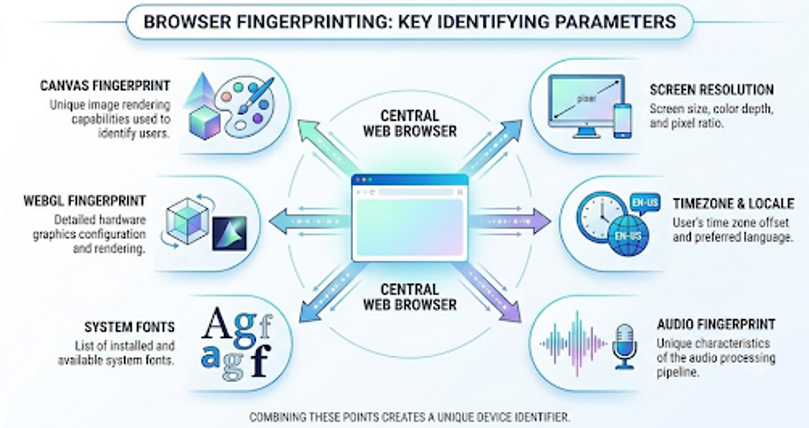
Browser fingerprinting is one of the most advanced tracking techniques used on the web today. Instead of relying on cookies, websites collect a combination of parameters — from GPU rendering to installed fonts — to create a unique identifier.
Studies show that modern fingerprinting can identify users with extremely high accuracy, even across sessions.
Antidetect browsers counter this by replacing real fingerprint data with synthetic but realistic values. Each browser profile becomes a separate digital identity.
Understanding this technology is essential for anyone working in digital marketing, cybersecurity, or online privacy.
Antidetect.org stands out as a resource that not only lists tools but also explains fingerprinting mechanisms in detail — including Canvas, WebGL, and audio tracking.
By learning how fingerprinting works, users can better protect their identities and operate more effectively in environments where tracking is the norm.
Understanding the Role of an Anti-detect Browser
This is precisely why an anti-detect browser has transitioned from a niche utility to an essential professional tool. Unlike standard web browsers, an antidetect browser is specifically engineered to create completely isolated browsing environments. Each environment, or “profile,” functions as a standalone digital identity with its own unique set of parameters.
Instead of presenting a single, traceable fingerprint to the world, you can manage dozens or even hundreds of distinct profiles that appear to websites as entirely different users on independent devices. This technology goes far beyond what a VPN or Incognito mode can offer, as it addresses the core issue of hardware and software fingerprinting.
Key Components of Secure Profile Isolation
To maintain true online privacy and prevent account linking, each profile in an anti-detect browser can be customized with specific attributes, including:
- Unique Browser Fingerprints: Each session generates a different set of Canvas, WebGL, and AudioContext signals to mimic various hardware configurations.
- Isolated Storage: Every profile maintains its own separate cookies, cache, and local storage, ensuring no data leakage between accounts.
- Network Customization: Users can assign unique proxies or IP addresses to each profile, making them appear to be connecting from different geographical locations.
- System Metadata: You can adjust time zones, languages, screen resolutions, and even hardware-level parameters like CPU cores or RAM to enhance the realism of each identity.
Empowering Professional Workflows
This level of control makes anti-detect browser technology invaluable across various industries. Digital marketers rely on them to manage multiple advertising accounts across platforms like Facebook or Google without triggering automated flags. Developers and QA engineers use them to test how websites perform across different device configurations and regions without needing a physical lab of hardware.
Furthermore, researchers and journalists use these tools to maintain a high degree of online privacy while investigating sensitive topics or studying how tracking algorithms behave in real-time. By controlling the signals exposed through WebGL or HTTP headers, professionals can ensure their secure browsing habits remain undetected by aggressive scripts.
See also: Smart Grid Technology for Energy Management
Conclusion: Navigating the Modern Web Safely
As tracking technologies become more sophisticated, the tools we use to protect our identities must evolve accordingly. An anti-detect browser provides the necessary layer of defense against modern fingerprinting techniques that traditional solutions simply cannot block.
When used responsibly for privacy protection, research, or legitimate multi-account management, these tools provide a level of security that is becoming mandatory for anyone operating seriously in the digital space. Understanding and mastering these identities is no longer optional; it is a fundamental skill for maintaining online privacy and ensuring a secure browsing experience in an era of total digital surveillance.